SMPTE Hollywood Section Explores 8K Advances; Debuts Kaleidescape Strato K Player
SMPTE Hollywood and the 8K Association co-hosted a June 18 presentation about the evolving 8K ecosystem and viewing experiences.
A highlight of the event was the debut of Kaleidescape’s new flagship Strato K movie player, which is capable of playing 8K movies and additionally introduces a new format called 4K Cinematic. It was demoed as part of the presentation, which was held at Amazon’s Culver Theater in its 8K Samsung LED screening room.
Kaleidescape described the 4K Cinematic mode as a high fidelity format with full chroma (up to 4:4:4) and “much higher” bitrates than today’s commonly used formats. According to the company, 4K Cinematic mode doesn’t require a separate grade and Kaleidescape would prep this format. The Strato K is certified by the 8K Association, having met the performance and interoperability requirements of its Technical Working Group.
“As viewing screens become even larger and more 8K content becomes available, the Strato K movie player is poised to play a key role in this emerging market segment.” said Juan Reyes, SMPTE Hollywood’s section chair and executive director of the 8K Association, who moderated the panel.
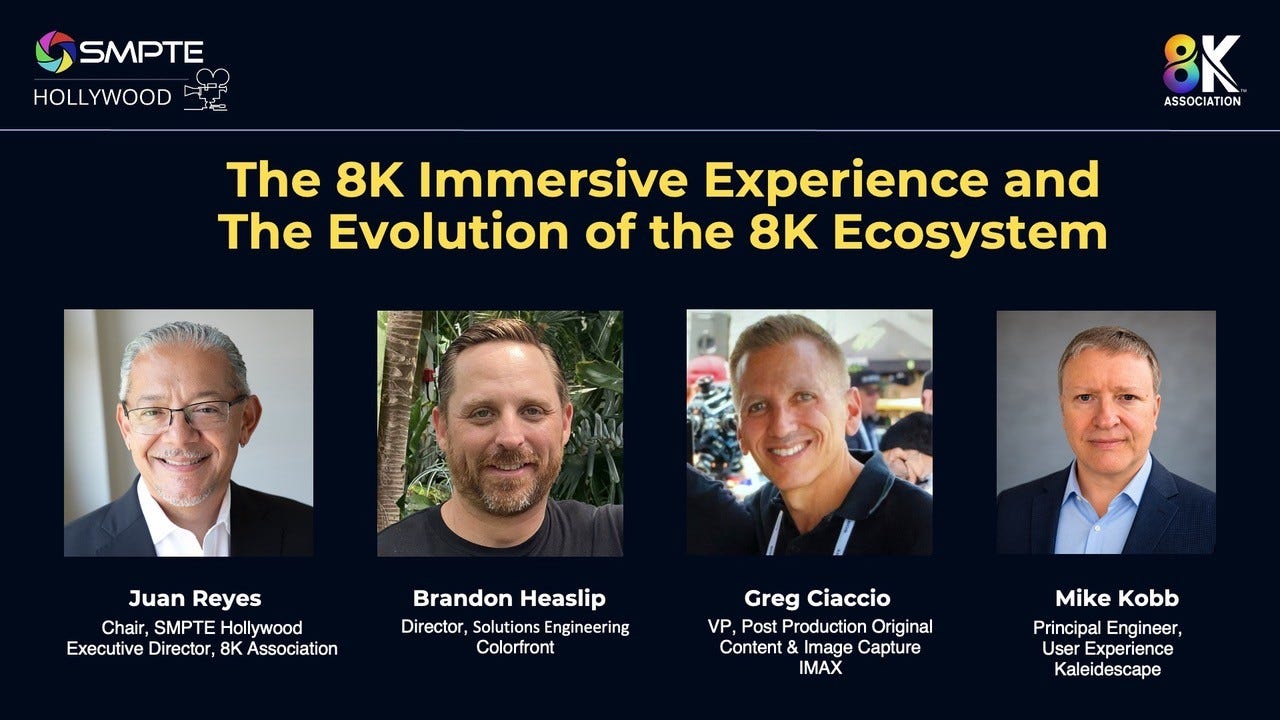
Mike Kobb, principal engineer at Kaleidescape, joined the panel and introduced Strato K, which works on its own or as part of a larger Kaleidescape system. The company reported that operating standalone, Strato K stores a handful of 8K, 4K Cinematic, or 4K movies on its internal one terabyte solid-state drive. Strato K can also be grouped with one or more Kaleidescape Terra movie servers to add movie storage. The Kaleidescape movie store includes movies available in 8K, 4K Cinematic, 4K and 2K, with lossless multichannel and object-based audio, including Dolby Atmos and DTS:X.
The panel was rounded out by IMAX vp of postproduction original content and image capture Greg Ciaccio and Colorfront director of solutions engineering Brandon Heaslip.
Featured content included restored footage from 1961’s West Side Story and 1968’s 2001: A Space Odyssey, as well as the American Society of Cinematographers’ StEM2 standard evaluation material, titled The Mission.